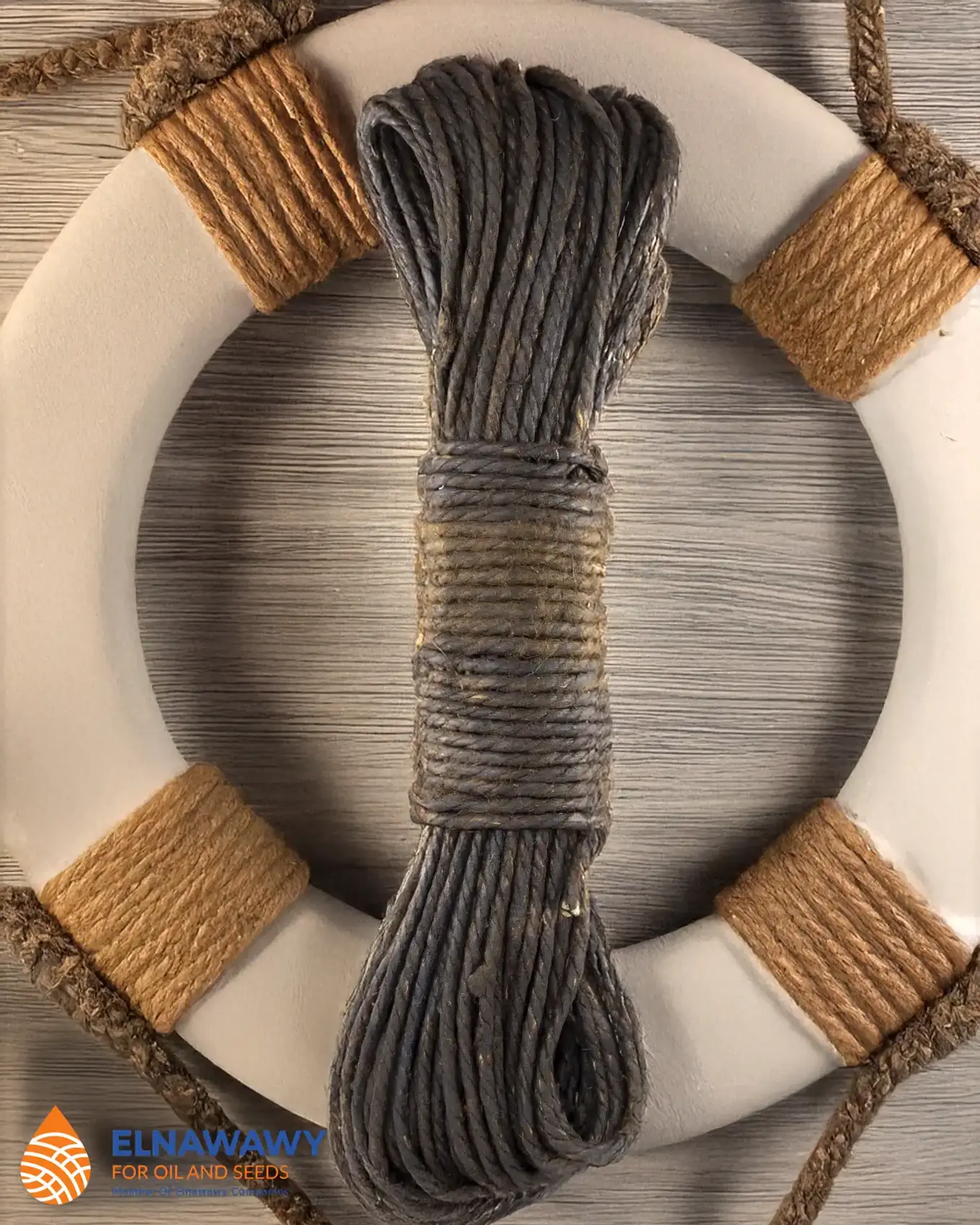
Tarred Marline Twine Supplier for Marine Rigging & Craft
Our mill in Gharbia spins tarred marline from 100% Egyptian flax linen, cured and polished with pine tar. Chandlers, riggers, net makers, garden suppliers and craft brands buy it from us.
Take 20–100 kg by air when you are trialling tarred marline, stocking a shop or supplying a workshop. For 500 kg and above we ship LCL or full container, direct from a certified Egyptian flax spinner.
Tarred marline is a light twisted twine soaked through with pine tar so that it goes on working when wet. Its job is binding rather than pulling: serving and seizing rigging, whipping rope ends against unlaying, lashing gear, tying in plants, and knotwork that calls for a dark weathered cord.
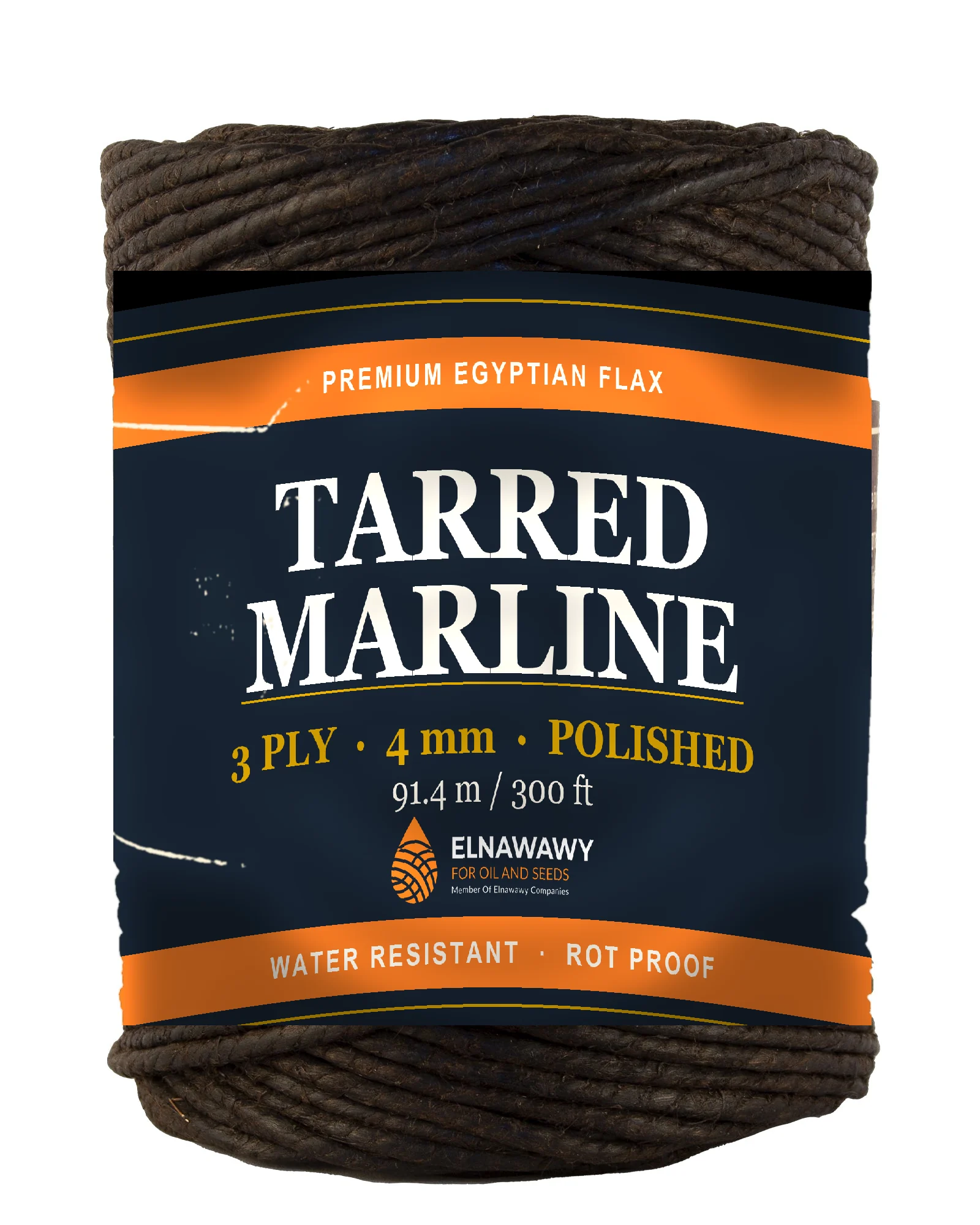
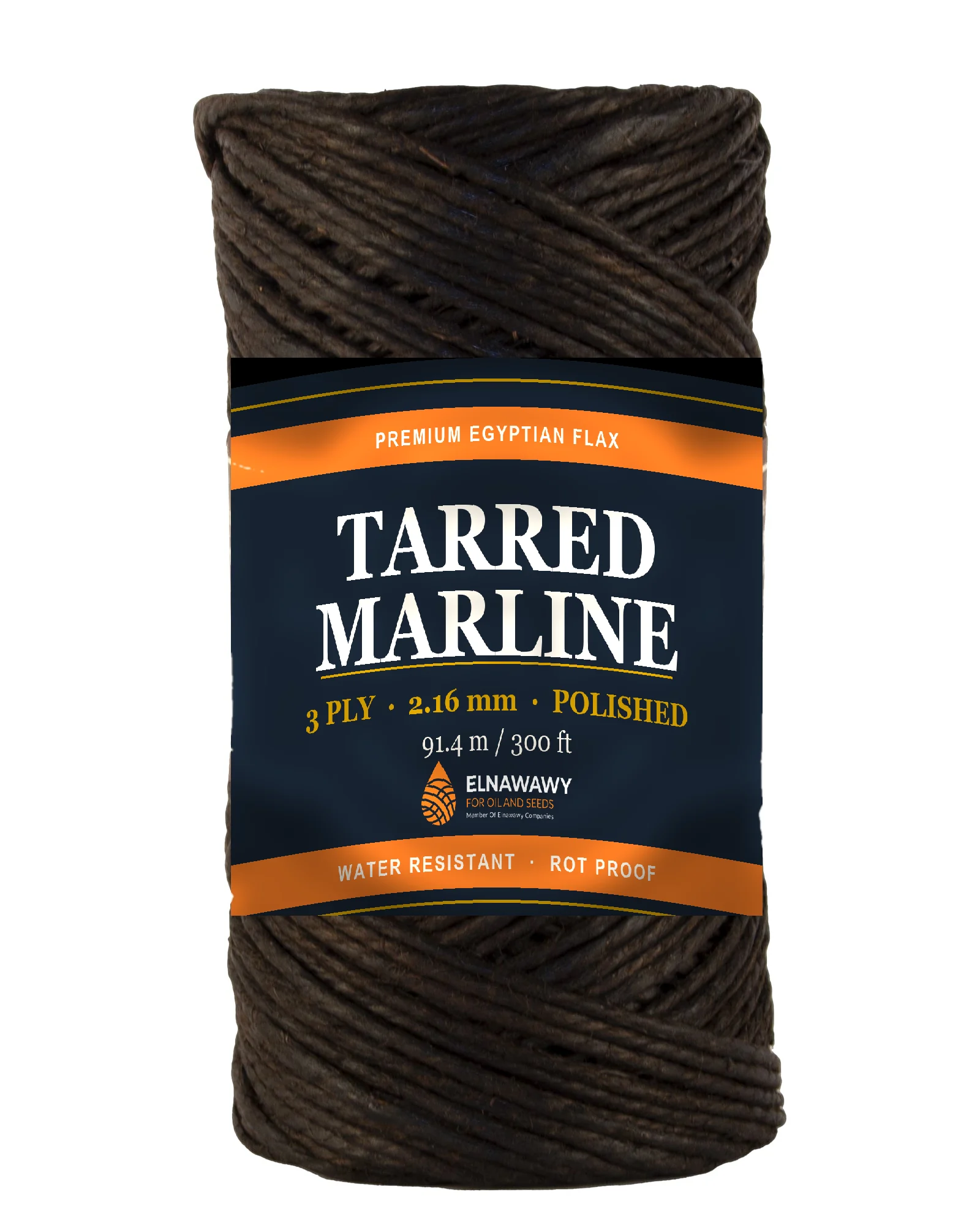
The name comes from marling, a running series of hitches that binds something long and tight. El Nawawy spins its tarred marline from 100% Egyptian flax linen, polished and cured with pine tar, in two grades: a bulk 4-ply at NM 0.6 supplied in 500 g and 1 kg balls and spools, and a fine 3-ply at 2.16 mm and 4 mm on spools. Hemp or jute accounts for most tarred marline sold today. Flax runs finer, packs denser through the twist, and draws tar into the fibre instead of leaving it on the surface. It sinks, it chars instead of melting, and it grips a knot where synthetic line lets it creep.
Two constructions of tarred marline come off our machines. The bulk grade is the traditional rigging and garden line, sold by weight; the fine grade is a lighter 3-ply, made in two diameters for craft, whipping and detail work.
Attribute
Bulk grade
Fine grade
Fibre
100% Egyptian flax linen
100% Egyptian flax linen
Treatment
Pine tar, fully cured
Pine tar, fully cured
Finish
Polished
Polished
Metric count
NM 0.6
—
Diameter
—
2.16 mm · 4 mm
Construction
4-ply twisted
3-ply twisted
Put-up
500 g and 1 kg — balls and spools
Spools
Length
approx. 200 m / 210 yds
30.48 m / 100 ft · 91.4 m / 300 ft
Colour
Natural dark brown to near-black
Natural tarred dark brown
Specific gravity
1.38 — sinks in fresh and salt water
1.38 — sinks in fresh and salt water
Working temperature
Up to 40 °C continuous
Up to 40 °C continuous
Tar softening point
approx. 180 °C
approx. 180 °C
Wet strength
Equal to or above dry strength
Equal to or above dry strength
Packing
To customer specification
Retail spool
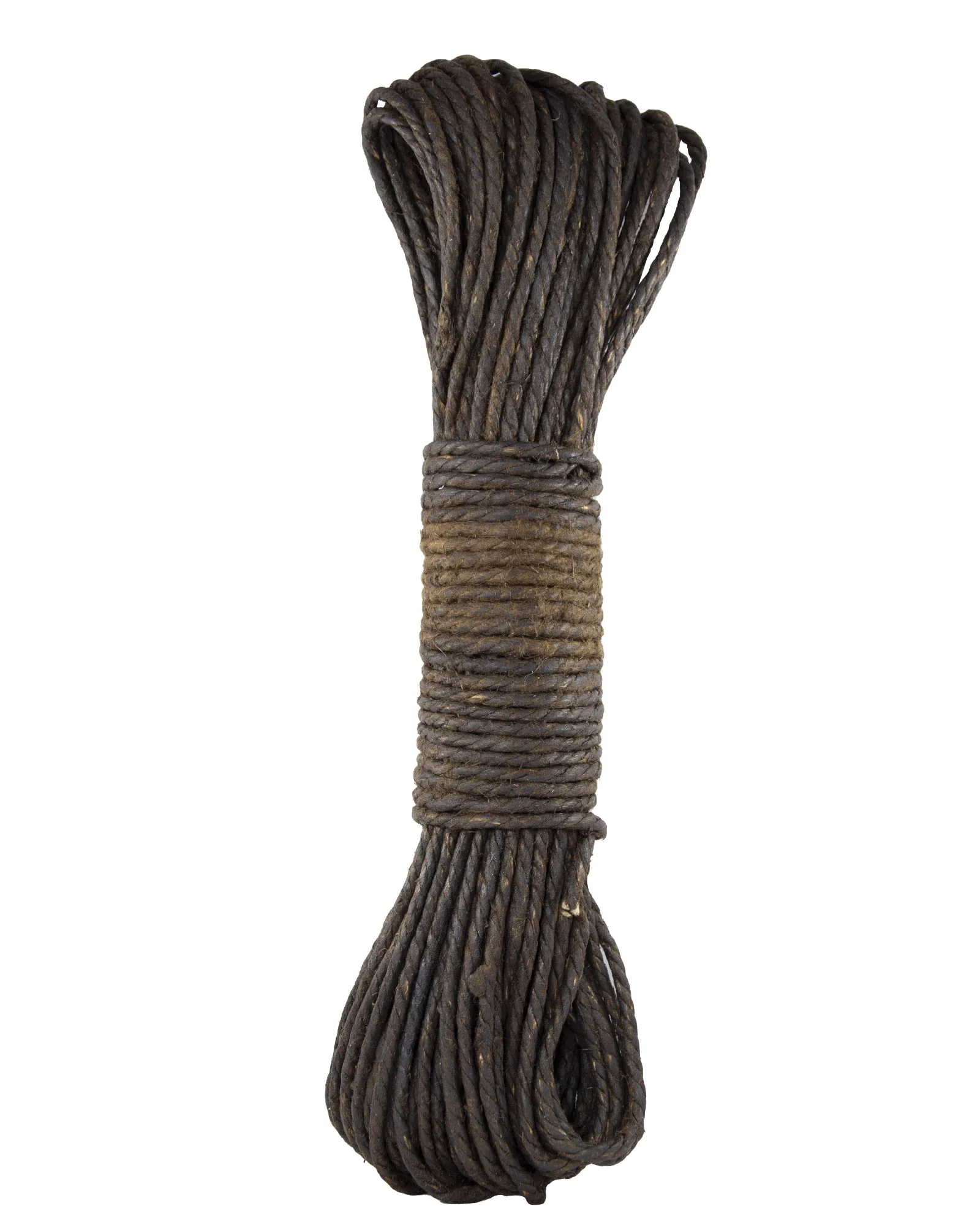
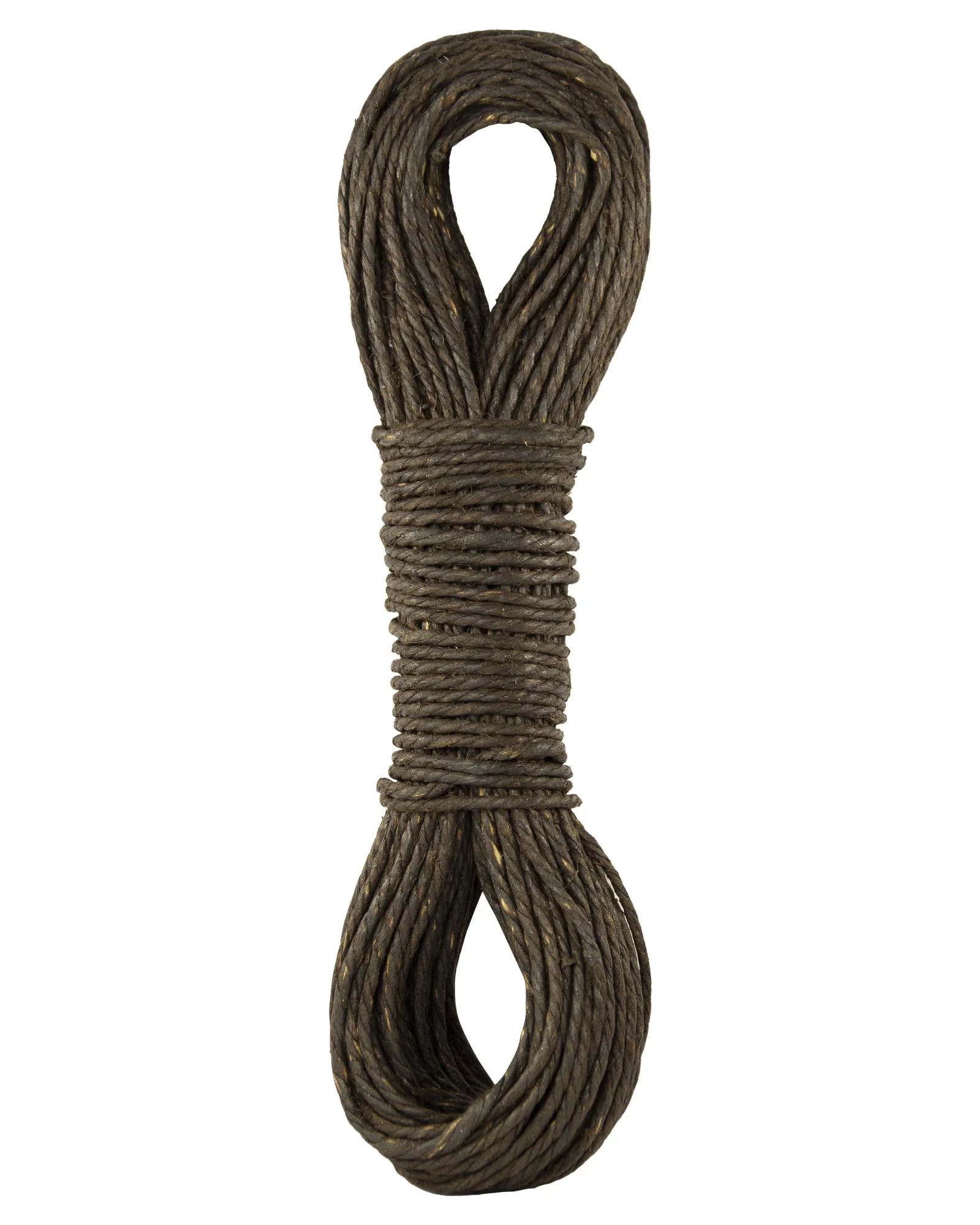
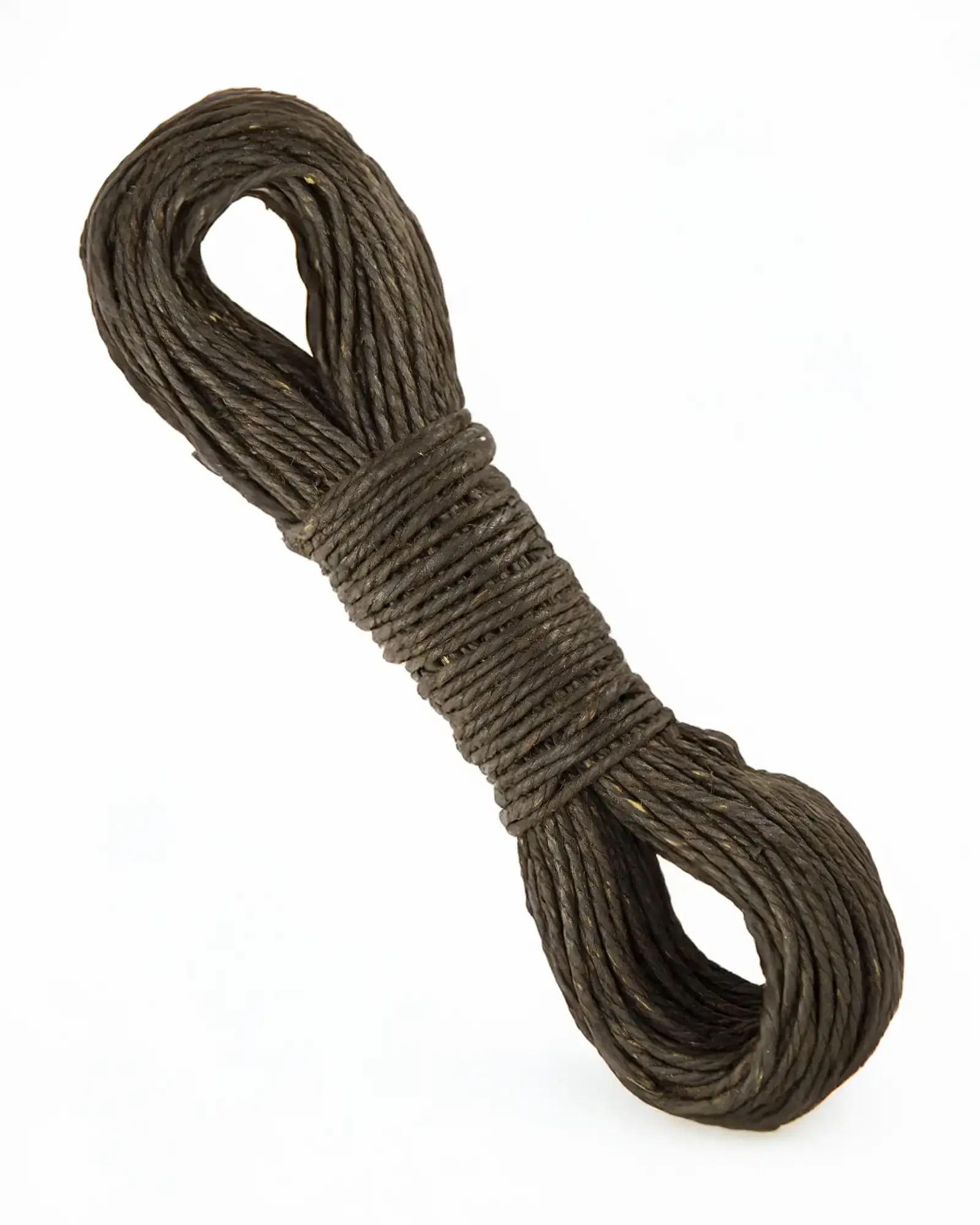
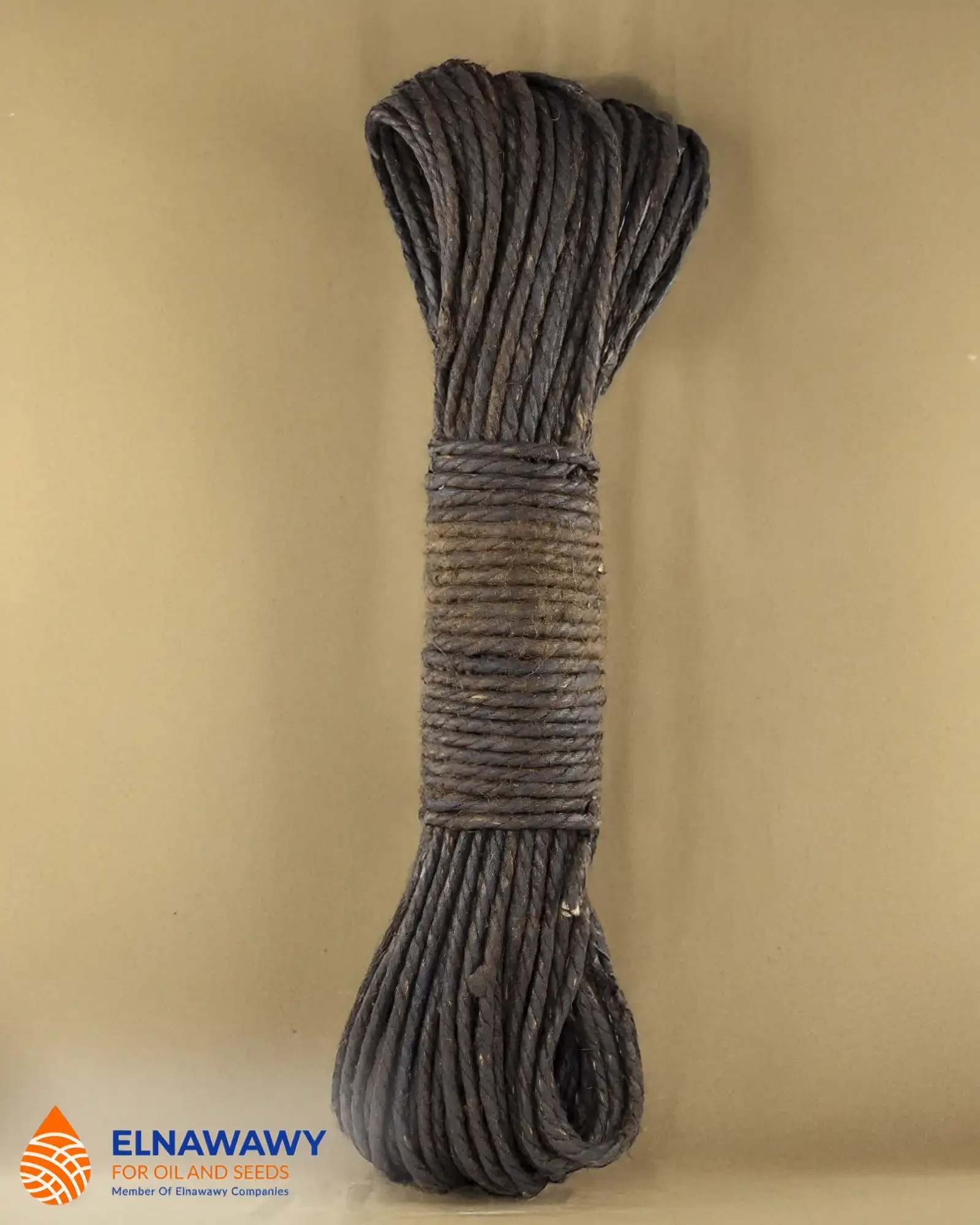
Bulk grade tarred marline — 4-ply NM 0.6, supplied as 500 g and 1 kg balls and spools.Fine grade tarred marline — 3-ply, here at 2.16 mm; also made at 4 mm.
Standard tarred marline put-ups are the 500 g ball, the 1 kg ball or spool, and the fine-grade spool at 100 ft and 300 ft. We set minimum order quantity, carton configuration and pallet loading per order. Send us the grade, the put-up and your annual volume, and we will quote against it.
Specification current as of September 2026. Ply, diameter, put-up, labelling and packing are made to order.
What pine tar does to a flax fibre
Flax fibre is hollow. Running through each filament is a central channel called the lumen, which draws water up by capillary action and holds it there. Untreated natural twine rots from that channel outwards.
Pine tar goes into that channel and cures there. What you get is a sealed fibre rather than a coated one, which is why tarred marline sheds water instead of drinking it, and why it carries on working wet.
Water and rot
Get jute, sisal or cotton wet and they swell, lose their lay and turn soft as fungal decay sets in. Tarred flax holds its dimensions through wetting and drying, over and over.
Sunlight
Dark cordage absorbs ultraviolet light instead of passing it through to the cellulose, and tar is dark. Bleached and undyed twines turn brittle and chalky outdoors well before a tarred one will.
Knot grip
The surface stays faintly tacky once the tar has cured, so turns bed into one another and hold. Riggers reach for tarred marline over a slicker synthetic line when whipping an end or serving a stay for exactly that reason.
Handle
Polished finish. The line lies flat, wraps tight around wire and timber, and will not crack or flake as you work it.
It sinks
Specific gravity 1.38. Rather than drifting on the surface, our tarred marline goes down in fresh and salt water alike, which is what net repair and any work below the waterline calls for.
Stable to 180 °C
Continuous working temperature reaches 40 °C, and the tar holds until roughly 180 °C before it softens. Flax chars instead of melting, so nothing fuses or drips near heat the way synthetic line will.
Stronger wet than dry
Few fibres gain strength wet; linen is one of them. Under load our flax swells inside the tar matrix, so the line holds at or above its dry strength in precisely the conditions it was built for.
What tarred marline twine is used for
Boats, small ships and the garden, wherever water resistance matters
Serving and seizing standing rigging. Whipping rope ends against unlaying. Ratlines, sail hanks, gear lashed on deck. Ashore: staking and tying in plants, bundling canes and branches, and any garden tie that has to survive a full season of rain and sun without turning to fluff.
Macramé, crochet, hand knitting and decoration
Knotwork that wants weight and a dark weathered colour suits the fine grade of tarred marline twine: wall hangings, nautical and rustic décor, scale model ship rigging, bookbinding, leather stitching. A knot holds without the tail working loose, which counts in work nobody goes back to re-tighten.
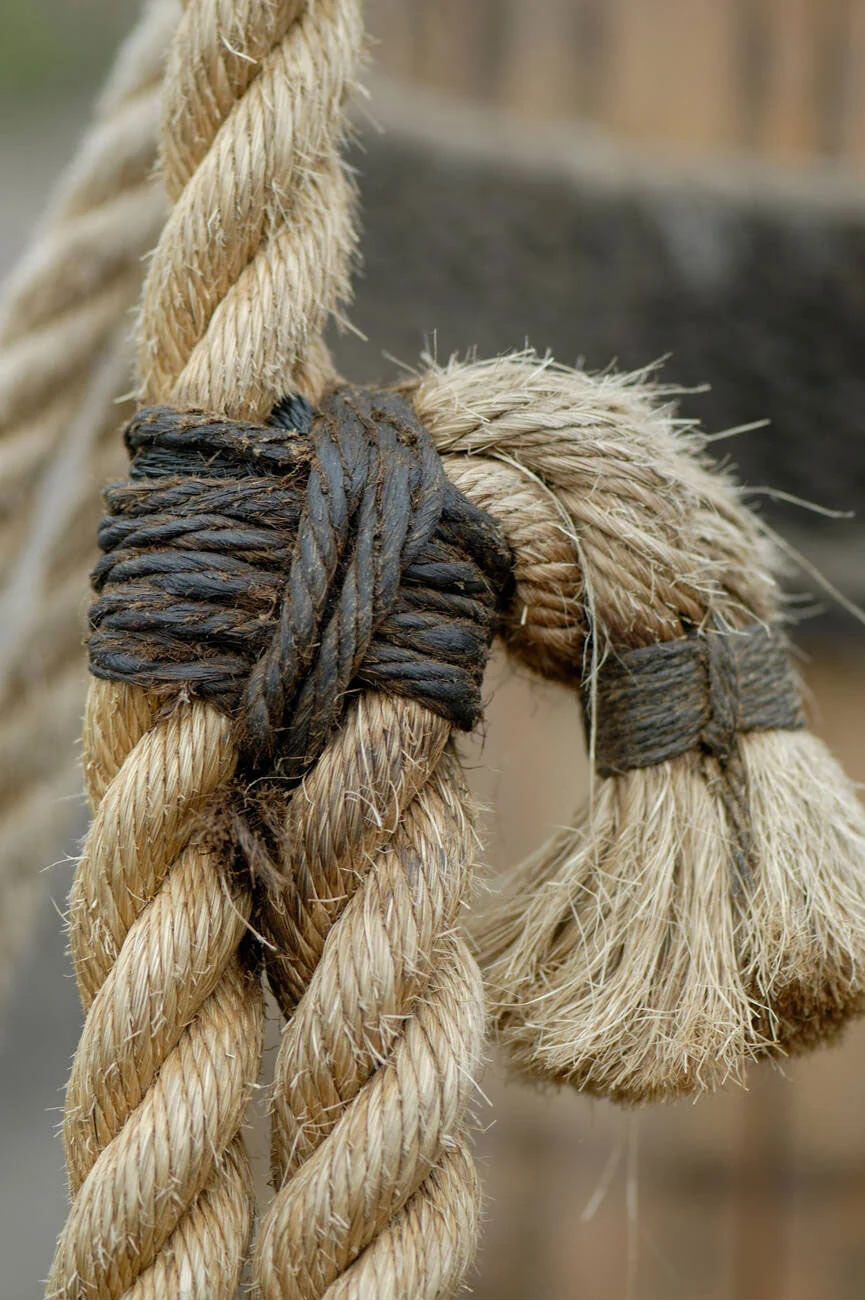
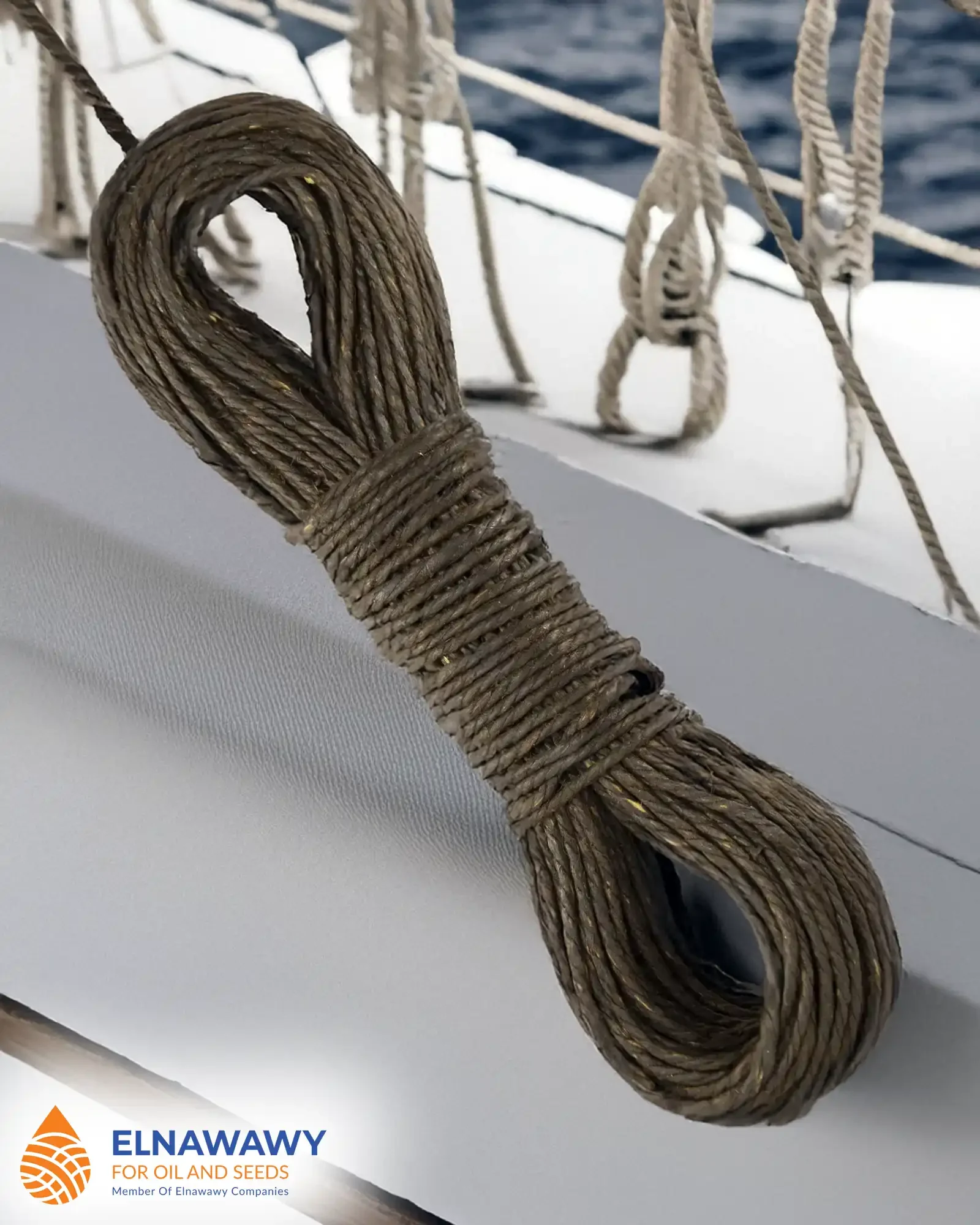
Whipping a rope end with tarred marline. The tacky surface keeps every turn bedded.Aboard: serving, seizing and lashing on deck.Decorative and model work, where the colour does the job.
Why ours is flax rather than hemp
Since the age of sail, tarred marline has been ship’s cordage: wound around standing rigging to keep weather off the wire, whipped onto rope ends to stop fraying. What changed is the fibre.
Almost all tarred marline sold now is hemp or jute. Ours is flax. Flax filament runs finer than hemp and packs denser through the twist, which yields a smoother marline twine with less stretch at the same count, and a surface that draws tar deep and even instead of letting it sit on top.
Egyptian flax has been our work since 1974. The business started as a flaxseed crush mill making linseed oil, moved on to processing and trading raw fibre, and now spins yarn and twine at our own mill on the Tanta–El-Mahalla road in Gharbia. Mills, chandlers, packers and brand owners across Europe, North America and Australia buy from us.
Tarred flax against untreated twine and synthetic bank line
Criterion
Tarred flax linen
Untreated jute or sisal
Synthetic bank line
Wet behaviour
Sheds water; stays stable
Absorbs, swells, softens
Sheds water
Rot
Sealed against it
Decays in a season outdoors
Does not rot
Sunlight
Dark tar absorbs UV
Bleaches and goes brittle
Varies by grade
Knot grip
Tacky; turns stay bedded
Fair dry, poor wet
Slick; turns can creep
Near heat
Chars, does not melt
Chars
Melts and fuses
In water
Sinks
Sinks
Often floats
End of life
Plant fibre and wood tar
Plant fibre
Persistent plastic
Material-level comparison. Grades vary widely within each column.
No plastic in it, so it sheds none
Synthetic rope wears as it works, and microplastic is what comes off. Researchers at the University of Plymouth’s International Marine Litter Research Unit measured that release directly: they hauled rope under load and counted what it shed.
New rope20fragments per metre hauled
Two years old720fragments per metre hauled
Ten years old760+fragments per metre hauled
Both age and load push shedding up, by roughly 1.4 extra particles per metre for each additional kilogram hauled. Across the world’s rope, abrasion is put at something like 768 trillion particles a year, near 2.8 kilotons. Nor does synthetic line disappear: polypropylene loses about 0.39% of its mass a month in seawater, which is why lost gear carries on fishing long past the point anyone wanted.
What ours does instead
No microplastic release. Our tarred marline twine is flax fibre and pine tar. There is no plastic in it, so there is no plastic to shed — not when new, not after ten years of work.
It sinks. Specific gravity 1.38, so a lost length of tarred marline goes down rather than drifting on the surface.
Both routes are open: small air shipments for buyers testing quality, wholesale volumes by sea. Same tarred marline twine, same mill, whichever you take.
Need less than 20 kg?
We are the mill, so we supply trade quantities only. Single spools and retail put-ups of our tarred marline twine reach boat owners, riggers and makers through stocking brands and chandleries. Tell us your country and what you need it for, and we will point you to someone who sells it in your size.
Because we spin our tarred marline rather than resell it, the product is set at the machine instead of picked off a shelf.
Ply — 3-ply and 4-ply as standard, other constructions to order
Size — NM 0.6 bulk, 2.16 mm and 4 mm fine, other diameters on request
Put-up — balls, spools and hanks; 500 g, 1 kg or your own weight
Labels — your artwork, your language, barcodes, private label or neutral packing
Packing — carton configuration, pallet loading and export documentation to your market
What to send us
Buyer type, quantity, destination country, shipment method, grade and put-up, pack weight, label language, carton packing, and whether a sample is needed. A quote comes back within one working day.
Water-resistant, not waterproof. Sealing the fibre’s lumen with tar means the twine sheds water and will not rot, but this is natural cordage rather than a sealed synthetic. It is built to work wet, dry off, and work wet again.
Will the tar come off on my hands?
Fully cured tar on polished tarred marline does not bleed at normal temperatures. A slight tack remains, and that tack is the grip you are paying for. Soap and warm water take off any residue, or vegetable oil.
Does it sink or float?
It sinks. At a specific gravity of 1.38 our tarred marline drops through fresh and salt water instead of drifting on top, which is what net work and anything below the waterline needs.
How is it different from tarred hemp marline?
The treatment is the same; the fibre is not. Flax filament runs finer and packs denser through the twist, so you get a smoother, lower-stretch line at the same count. Hemp or jute is what most tarred marline is; flax is the rarer choice.
What size should I choose?
Take bulk 4-ply tarred marline for serving, seizing, lashing and garden work. Fine 3-ply at 2.16 mm handles whipping, model rigging and detail knotwork; 4 mm gives you that same fine construction with more body.
Can you pack to our specification?
Yes. Put-up, spool type, labelling and carton configuration are all set per order, private label included. Send your specification along with the quotation request.
Do you supply samples?
Yes, for trade buyers. Ask when you request a quotation and say which grade of tarred marline you want.
Specification maintained by the El Nawawy production team, at our mill on the Tanta–El-Mahalla road, Gharbia, Egypt. Spinning flax since 1974. Last reviewed September 2026.
For certified test figures, a sample, or a specification we have not published, ask the export desk and we will tell you what we can evidence.